
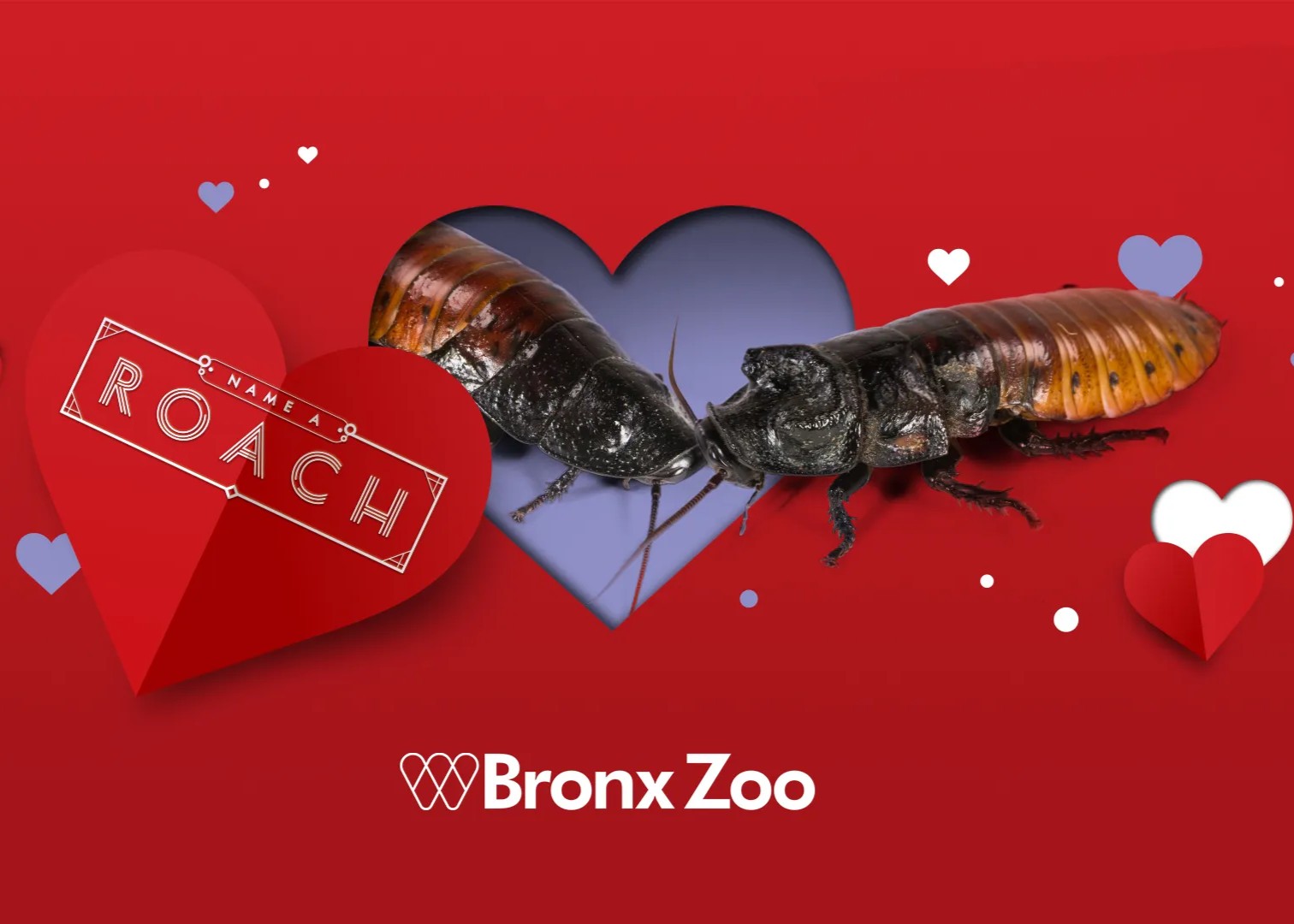
This Valentine’s Day, thousands of people will skip the traditional flowers and chocolates and instead surprise their loved ones with something far more unusual — a cockroach named in their honour.
The Bronx Zoo in New York has turned one of nature’s least romantic creatures into an unlikely symbol of affection through its long-running “Name a Roach” fundraising campaign. First launched in 2011, the initiative invites participants to make a donation to the Wildlife Conservation Society, the organisation responsible for several of the city’s zoos and conservation programs. In exchange, donors can officially assign a name to one of the zoo’s Madagascar hissing cockroaches, with recipients receiving a personalised certificate on Valentine’s Day confirming the honour. For those wanting to lean fully into the joke, the zoo also offers themed merchandise and even virtual encounters with the insects.
What began as a quirky seasonal promotion has evolved into a surprisingly successful fundraiser. Over the past 15 years, the campaign has generated more than one million dollars in support of wildlife conservation and resulted in tens of thousands of roaches being named. Zoo organisers say the program’s appeal lies in its playful rejection of Valentine’s Day clichés, reflecting how modern relationships often celebrate humour and individuality just as much as romance.
Despite their reputation, Madagascar hissing cockroaches are a world apart from the pests many people imagine. Native to the island of Madagascar, these insects can grow to roughly the length of a human palm and are known for their sturdy bodies and distinctive markings. Rather than using vocal cords, they create their famous hissing sound by forcing air through tiny openings along their exoskeleton called spiracles. The hiss serves several purposes — from warning off predators and communicating within their colony to playing a role in courtship.
Male cockroaches are particularly competitive during mating season, developing horn-like structures on their heads and engaging in physical contests to establish dominance and win over females. According to zoo caretakers, the insects require little encouragement when it comes to reproduction, as breeding occurs naturally within their habitat.
Staff members admit the concept initially raised eyebrows when it was first suggested as a way to boost visitor engagement during quieter months. Even those involved questioned whether people would embrace such an unconventional Valentine’s gesture. Years later, the program’s continued popularity suggests that love — and fundraising — sometimes works best when it doesn’t take itself too seriously.
In the end, the campaign proves that romance doesn’t always arrive wrapped in roses. Sometimes, it hisses.