
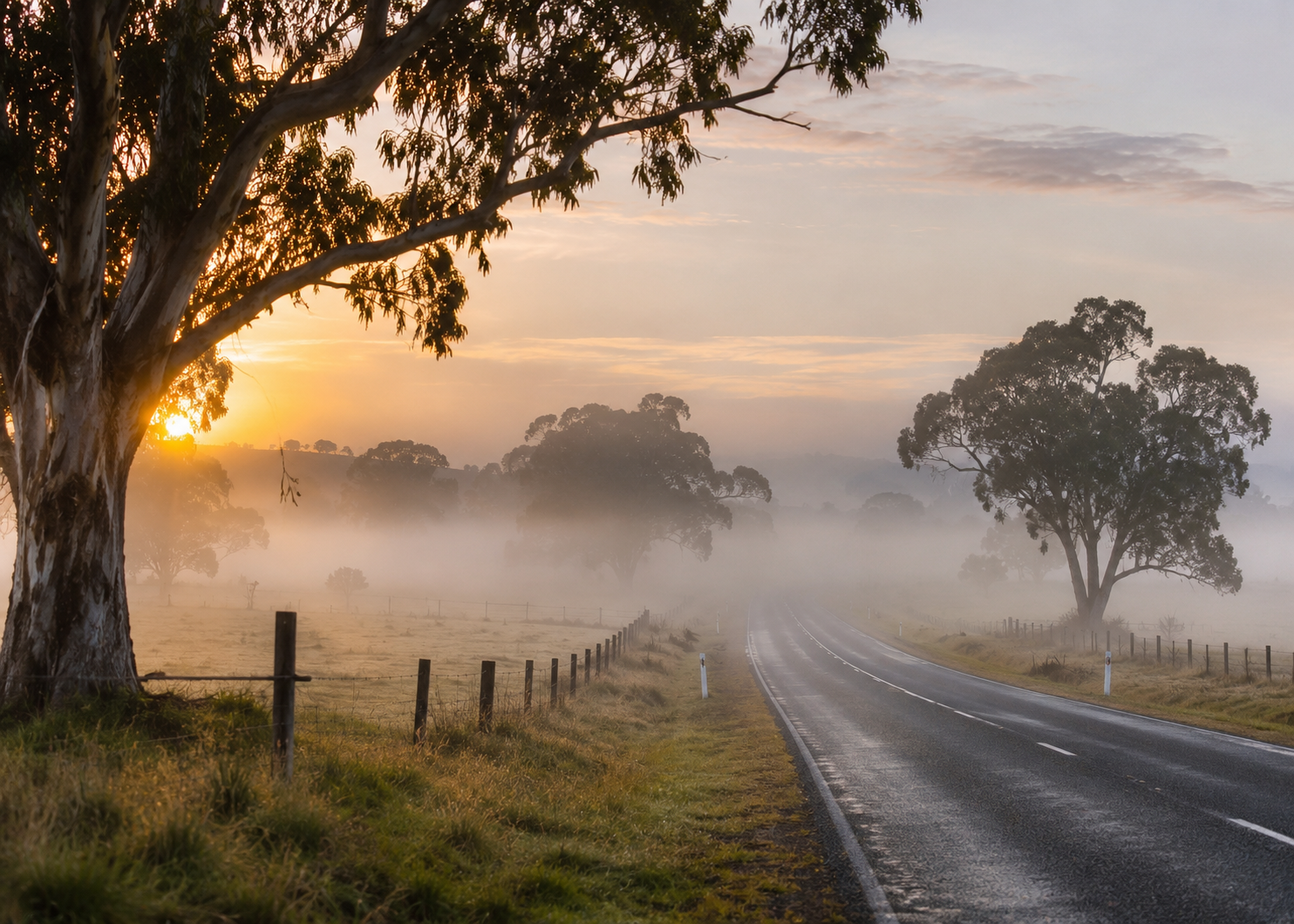
If you’ve noticed more foggy mornings across southern Australia, you’re not necessarily imagining things. New research suggests parts of the country are experiencing increasing amounts of winter fog, bucking a trend seen across much of the world.
Australia’s first nationwide study of fog has revealed that western Victoria, South Australia’s Eyre Peninsula and southeastern Western Australia are among the regions experiencing the biggest changes.
Researchers examined weather patterns between 1980 and 2024 and discovered that some areas have been recording an additional 30 minutes to an hour of winter fog each year.
That might not sound particularly dramatic, but in regions that typically experience fewer than 50 hours of fog throughout winter, the increase is significant.
Interestingly, while fog is becoming less common in many parts of the world, southern Australia appears to be heading in the opposite direction.
Scientists believe changing weather patterns could explain why. Reduced rainfall and more frequent high-pressure systems can produce clearer winter nights, allowing temperatures near the ground to drop and moisture to develop into fog.
And while a misty morning might make for a beautiful photograph, fog can also create serious problems.
Reduced visibility can disrupt flights, delay transport and make driving particularly dangerous. In December 2023, thick fog contributed to a multi-vehicle crash on Victoria’s Western Freeway that sent 20 people to hospital.
The research also identified Canberra as Australia’s foggiest capital city, largely because of its location in a valley.
Researchers say further investigation is needed to determine whether the increasing fog trend will continue.
So, the next time you wake up to find your neighbourhood disappearing behind a blanket of white, remember there’s some fascinating science behind it.
And perhaps allow yourself a few extra minutes for the morning commute.
Source: The Conversation, by Kimberley Reid and Andrew King, republished by Phys.org, 16 November 2026. Research published in the Journal of Hydrometeorology (2026). Phys.org